Carton sealing is often the last touch before a product ships — and small inconsistencies here create big costs: rework, damaged goods, customer complaints, and slowed throughput. If you are still relying on a carton sealing machine manual workflow, 2026 labor costs and output targets may be pushing you toward automation. This guide compares manual and automatic options and shows how to choose the right carton sealer for your line speed, carton mix, and ROI goals.
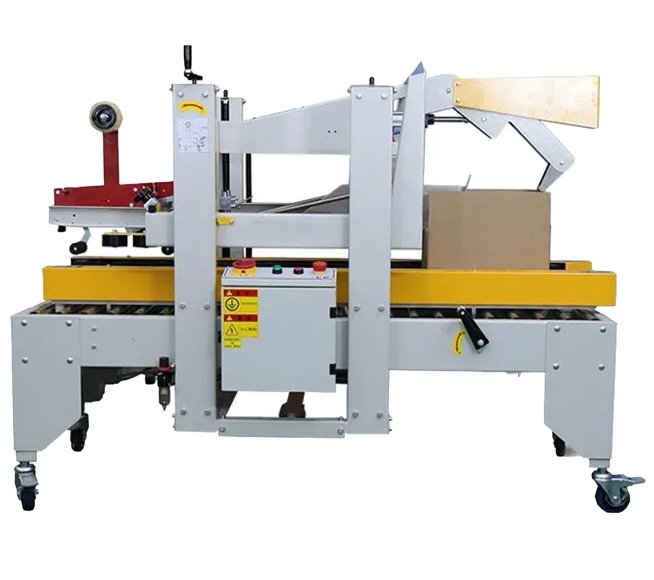
Carton Sealing Machine Manual Reality: The Hidden Costs of Hand Sealing
Why Manual Sealing Costs More Than It Appears
Manual carton sealing looks like the lowest-cost option at startup — no equipment investment, immediate deployment, flexible for any carton size. The cost becomes visible when you measure what happens across a full shift, a full week, and a full year.
| Cost Category | Manual Sealing Outcome | Annual Impact at 1,000 Cartons/Day |
|---|
| Labor per carton | Operator tapes each carton; typically 15–30 seconds per box | 4–8 labor-hours per shift just for sealing |
| Inconsistent tape placement | Variable tape alignment; edges not centered; wrinkles | 2–5% rework rate; tape supplies wasted |
| Crushed corners and open seams | Inconsistent pressure; operator fatigue | Returns, re-packing labor, customer complaints |
| Training and turnover | Each new operator needs training; quality varies | Ongoing training cost; quality resets with staff changes |
| Speed ceiling | Human speed limits line throughput | Line output capped by the sealing station |
Where the Cost Shows Up at Scale
At 500 cartons per day, manual sealing is manageable. At 2,000 cartons per day, the cost structure changes: the labor hours become significant, fatigue-related errors increase toward the end of each shift, and the probability of an open-seam reaching a customer rises with volume.
The decision to automate is not about whether manual sealing can work — it clearly can. It is about whether the accumulated cost of inconsistency, labor, and rework exceeds the investment cost of a carton sealer.
Carton Sealer Automation Benefits: Consistent Quality and Higher Throughput
What Automation Changes at the End of Line
| Performance Factor | Carton Sealing Machine Manual | Automated Carton Sealer |
|---|
| Tape placement consistency | Operator-dependent; varies with fatigue | Machine-controlled; identical on every carton |
| Tape tension | Variable; too tight compresses carton; too loose creates open seams | Defined by tape head settings; consistent through the shift |
| Speed | Typically 5–15 cartons per minute by hand | 20–40+ cartons per minute depending on model |
| Shift-to-shift consistency | First hour vs last hour differs | Machine performance is stable regardless of shift timing |
| Open-seam rate | Higher; depends on operator attention | Very low; machine detects and rejects or alarms |
| Labor requirements | One operator per sealing station | One operator can supervise multiple lines |
Quality Outcomes That Affect Customer Experience
A properly sealed carton protects the product inside through the entire distribution chain — warehouse stacking pressure, courier handling, last-mile delivery. The downstream costs of poor seal quality — product damage, customer returns, and brand damage — are often not attributed to the sealing station but originate there.
An automated carton sealer delivers centered tape placement, consistent adhesion, and uniform seal width on every carton. This consistency is visible to the recipient and builds confidence in the brand's packaging quality.
Carton Sealing Machine Manual vs. Auto: Which Volume Justifies the Upgrade
When Manual or Semi-Manual Still Makes Sense
| Scenario | Why Manual May Be Sufficient | Consideration |
|---|
| Very low volumes (under 100 cartons/day) | Automation payback period is too long | Monitor for volume growth |
| Prototype or sample packing | No standard carton size; frequent changes | Semi-auto with adjustable guides provides a middle option |
| Highly variable carton mix | Frequent changeover needed; automation adds complexity | Semi-auto or manual-adjust machines are more practical |
| Seasonal peak only | Machine sits idle most of the year | Rental or contract packing may be more economical |
When Automation Clearly Wins
Medium to high volume (300+ cartons per day consistently): the labor saving alone typically delivers payback within 6–18 months
Standardized carton sizes: two or three regular carton sizes across the product range allow fast changeover with minimal operator intervention
Shift-based operation: night shifts and weekend shifts with reduced supervision are managed better by a machine than by a fatigued operator
Compliance-sensitive products: sectors where seal integrity is audited (pharma, food, medical devices) benefit from the documented consistency of machine sealing
The Semi-Auto Middle Ground
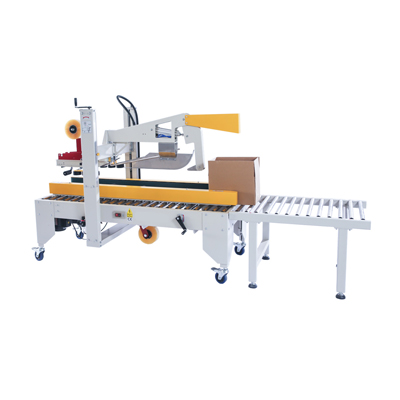
A semi-automatic carton sealer — where the operator closes the carton flaps and places the carton on the machine, and the machine applies the tape and ejects the sealed carton — is often the right answer for mixed-SKU operations. It reduces the most repetitive and error-prone part (tape application) while retaining flexibility for carton size variation.
Carton Sealer Selection Checklist: Specs and Line Integration
Technical Specifications to Define Before Quoting
| Specification | What to Define | Notes |
|---|
| Carton size range | Minimum and maximum L × W × H | The machine must accommodate your full carton range |
| Sealing requirement | Top only, bottom only, or top and bottom | Top-and-bottom machines are higher cost but eliminate the second pass |
| Required speed | Cartons per minute at your typical carton size | Confirm at the largest carton, not just the smallest |
| Tape width | 48 mm or 75 mm standard | Must match the machine's tape head specification |
| Carton weight | Maximum filled carton weight | Affects belt drive sizing |
| Power supply | Single phase or three phase | Confirm for your facility |
Equipment Features That Determine Reliability
| Feature | Why It Matters |
|---|
| Tape head quality | The tape head is the highest-wear component — specify a known brand or confirm replacement cost and availability |
| Side belt vs top belt drive | Side belt drive handles a wider carton height range; top belt drive is simpler for uniform cartons |
| Auto-adjust vs manual adjust | Auto-adjust reduces changeover time; manual adjust is lower cost for operations with few size changes |
| Jam detection and alarm | Stops the machine before damage occurs; required in high-speed applications |
| Easy tape change | Tool-free tape loading reduces downtime; confirm the procedure before purchase |
| Safety guarding | Confirm compliance with local machinery safety standards |
Line Integration Considerations
Infeed conveyor: confirm the infeed height matches the upstream packing or case erector output height
Outfeed conveyor: confirm the exit direction and height align with your labeling or palletizing station
Print-and-apply compatibility: if labels are applied before or after sealing, confirm the label position is not covered by tape
Carton Sealer ROI: Payback Model and Maintenance Planning
Simple ROI Calculation Framework
| Input | Data Source | Example |
|---|
| Cartons per day | Production records | 800 cartons per day |
| Labor cost per carton (manual) | Labor rate ÷ cartons per operator-hour | USD 0.08 per carton |
| Rework rate (manual) | Quality records | 3% of cartons resealed |
| Rework cost per carton | Labor + tape waste | USD 0.25 per rework event |
| Annual labor saving (automation) | (Labor per carton × daily volume × working days) − machine operating cost | Calculated |
| Annual rework saving | Rework rate × daily volume × working days × rework cost | Calculated |
| Machine investment | Equipment + installation + training | Quotation |
| Simple payback period | Investment ÷ annual saving | Target 12–24 months |
Maintenance Planning
Tape head wear: blade and pressure roller are the highest-frequency wear items — stock spares and confirm replacement cycle from the manufacturer
Drive belts and rollers: inspect monthly; replace on a defined schedule rather than waiting for failure
Cleaning routine: adhesive residue builds on the tape head and frame — weekly cleaning prevents buildup that affects seal quality
Lubrication: confirm which components require lubrication and the correct lubricant type — incorrect lubricant causes premature bearing and roller wear
Implementation Plan
Pilot install on the highest-volume sealing station
Measure baseline throughput and defect rate for two weeks before installation
Run the machine for four weeks and compare throughput, rework rate, and labor hours
Use the measured data to calculate actual payback period
Scale to additional lines based on confirmed results rather than projected savings
Conclusion
If carton sealing is slowing your line or generating avoidable rework, upgrading from a carton sealing machine manual workflow is a measurable investment with clear returns. A properly matched carton sealer standardizes seal quality, increases throughput, and reduces labor pressure across every shift. The key is matching the machine type to your actual carton mix and validating the ROI with real production data before committing to full-line deployment.
FAQ
Q1: What is the difference between a manual and automatic carton sealer?
A manual carton sealing machine relies on the operator to apply tape to each carton by hand — placement, tension, and alignment vary with each application. An automatic carton sealer drives cartons through the machine on a conveyor, applies tape at defined positions with consistent tension and alignment, and ejects the sealed carton without operator intervention. The result is faster throughput and significantly more consistent seal quality across every carton in the run.
Q2: When should I replace a carton sealing machine manual process with automation?
Automation becomes financially justified when volume reaches approximately 300 or more cartons per day on a consistent basis, when a significant rework rate is attributable to inconsistent manual sealing, when labor cost per sealed carton is measurably affecting product margin, or when sealed carton integrity is audited and documented quality records are required for compliance.
Q3: Can one carton sealer handle multiple different carton sizes?
Yes, most carton sealers accommodate a range of carton sizes. The range is defined by the machine's minimum and maximum height, width, and length specifications. Some machines require manual adjustment of guide rails and tape head position when changing carton sizes — which takes 5–15 minutes. Higher-specification models have auto-adjust or quick-adjust mechanisms that reduce changeover time to under two minutes.
Q4: What causes tape seals to fail on automated carton sealers?
The most common causes of automated seal failure are worn tape head blades or pressure rollers that no longer apply consistent pressure, incorrect tape tension settings for the specific carton board weight, dust or moisture contamination on the carton flap surfaces preventing adhesion, tape quality below specification, and cartons that are slightly out of the machine's size range causing misalignment at the tape application point.
Q5: What information do I need to provide for an accurate carton sealer quotation?
Provide the minimum and maximum carton dimensions (length, width, height), the sealing method required (top only, bottom only, or top and bottom simultaneously), target cartons per minute at your typical production volume, the maximum filled carton weight, your available power supply (single or three phase), and whether integration with upstream or downstream conveyor systems is required.


 To Know Alpha-Pack More